Florence Residency

imgres-1“By the side of the everlasting Why there is a Yes–a transitory Yes if you like, but a Yes.” E.M. Forster

unnamed
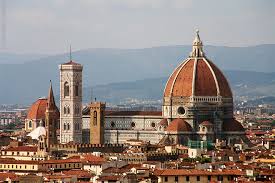
My big news is that I’ll be off to Florence in October as Irish Writers’ Centre/St. Mark’s writer in residence, and I am absolutely thrilled, and hugely looking forward to meeting the Florence Writers.

I’ve had a thing about Florence for a long time, as Mr. Neil Hegarty astutely sniffed out. . .

Screen shot 2016-07-14 at 20.58.05

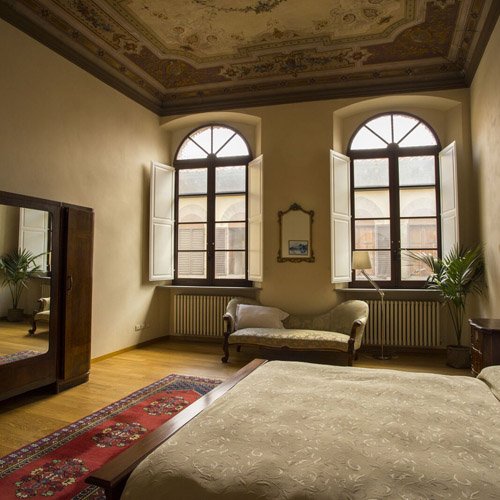
That innocent-abroad ship sailed a long time ago, but the eternal yes never quite left me, so, like Charlotte Bartlett, I’ll be packing up my mackintosh squares and taking myself to Florence, to a view I’ve yet to experience, but what a room!

CnREoKbWAAASCPW


Leonardo da Vinci at the National Gallery

images

Free but ticketed to allow the organisers ‘to keep numbers at a safe and comfortable level’, one could be forgiven for thinking they had accidentally stumbled into bookings for Rio 2016, but this is a selection of ten of Leonardo da Vinci drawings, on tour from the Royal Collection to galleries across the UK, and for the first time, the National Gallery, Ireland.

The ten drawings have been selected from the 600-odd in the Collection to reflect the diversity of Leonardo’s interests, including painting and sculpture, but also engineering, anatomy, cartography, geology, and botany. Studies for casting an equestrian monument; and Further casting studies, and lines of poetry present Leonardo’s detailed and carefully annotated engineering solutions to the problem of casting, in a pre-machine age, a seven-meter high bronze horse. Studies of an infant’s limbs reflects the Renaissance’s interest in life drawing, and its preferance for chubby-to-the-point-of-obese Christ-Childs.

The heart compared to a seed and The vessels of the liver, spleen and kidneys fill two sides of the same sheet of paper. These are the notes and drawings he made following his dissection of the corpse of a 100-year old man (one of 30 dissections he performed), ‘to see the cause of so sweet a death’. He resolves a medical connundrum in the former drawing as to which organ was the more vital, heart or liver. It is bitter-sweet to learn that most of his findings remained unknown to his contemporaries and successors. The beautifully produced and highly informative catalogue tells us that his notebooks were not published until the late 19th Century, and much research on them has been done only in the last few decades.

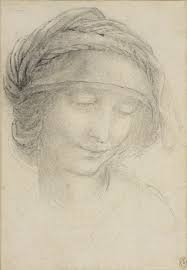
imgresThe Madonna and Child with St Anne occupied Leonardo intermittently for a remarkable two decades, and A study for the head of St Anne is probably the best known of the drawings on display. It is unexpectedly small (18.8x13cm), drawn in ‘black chalk, wetted in places’, on the rag-pulp paper which gives it the strength and stability credited with keeping the drawings so wonderfully preserved. St Anne’s face emits a radiance that feels impossible for a 550 year old artefact, and one so humble as a study.
A personal favourite is Blackberry and bird’s-foot trefoil, drawn in red chalk on orange-red prepared paper, which forefronts a simple sprig of briar weighed down with its berry clusters. It’s nice to think that Leonardo probably popped one of those berries into his mouth when he had finished drawing, and that it would have tasted the same to him as it does to us today.

Leonardo da Vinci saw connections between seeming disconnected areas, and his learning in one field inspired his exploration of another; the process and discoveries were of as much interest to him as the finished product, which sometimes resulted in less than comfortable living circumstances. It is extraordinary to contemplate the extent of his creativity, and above all, this exhibition serves to illustrate his openness and curiosity, about everything.

Despite the twenty-minute timed slots and a midweek, midmorning visit, the two viewing rooms were uncomfortably busy, begging the question of why we crowd to see famous artworks. John Berger, in his seminal Ways of Seeing (1972), says rather bleakly that ‘the uniqueness of the original now lies in it being the original of a reproduction’. In other words, because it is famous, we can see Leonardo’s Head of St Anne on mugs, tea-towels, magnets, or nowadays, online, but we still want to belong to that collective who can claim to have seen the famous original.

No doubt there is an element of truth to this. But there are other reasons to visit exhibitions like this one, even if it does mean some conspicuous hovering and occasional sighing from those impatient for their turn. When we encounter a picture which reaches across five and a half centuries, an untranslatable exchange occurs between the viewer and the work of art. Time can seem both to fall away and to compress, and we are confronted with the Rennaissance in a real and visceral way that no academic description, or no fridge-magnet reproduction, can recreate.

Until July 17th.

Review: Gods & Angels by David Park

Gods & Angels by David Park (Bloomsbury UK, 2016)

2Q==

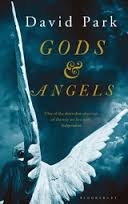
The gold curlicued lettering and blue-black gothic-inspired cover of Gods & Angels seems better suited to a YA apocalyptic fantasy, and it gives no hint that this is a book of short stories. But these are minor quibbles when the writer is David Park, whose nine previous books include IMPAC-shortlisted The Light of Amsterdam, The Truth Commissioner, and The Poets’ Wives.

Gods & Angels takes its title from Hamlet’s ‘What a piece of work is man’ speech, and it aptly encompasses the book’s dominant theme of masculinity. In ‘The Bloggers’, the separated husband protagonist — there are several – dedicates his new blog, Spartacus, to “men’s issues”, gently mocking them. The issues are varied, but fear, inadequacy, and isolation hover just beneath the surface for most of the predominately male protagonists.

In the opening story, a lecturer learning to swim also learns to navigate a relationship with a very different social group of men. He worries that his lack of football knowledge, or his English accent, or his soft hands will diminish him in their eyes. In ‘Gecko’, a teacher nearing retirement travels to see the Northern Lights with his wife for their 25th anniversary, but the experience is marred by his secret failing. In ‘Skype’, a man lives out his retirement on the island he moved to as part of a young couple, limited by his dual identities of retired master, and deserted husband. In ‘The Painted Cave’, a small-time hustler hides in a cave from his pursuers until, aided by the ancient cave paintings, he hallucinates away the murder of the girlfriend he abandoned to her fate.

One of the most affecting stories, ‘Man Overboard’, follows a group of men who have reluctantly included their depressed friend on their weekend away. They struggle to express emotions, and the narrator notices that they always revert to stories from their shared past, rather than discuss their current lives. Yet somehow, when their friend breaks down, they find a way to reach him. They may not have the words they think they should, but in the hands of Park, this can be ok too.

Short story collections inevitably invite comparisons between stories, and the least successful here is ‘The Strong, Silent Type’, whose protagonist is a shop mannequin borrowed by a teenage girl to make a statement at her school ball. It is commendable that Park is prepared to step outside his usual realism, but the narrative voice never quite stabilises, and the mannequin feels gimicky, a vehicle on which to hang man-talk and comments about “real men”, and does not convince.

Park successfully transends the real, however, in the incredibly moving final story, ‘Crossing the River’, which is dedicated to the memory of his mother, Isabel Park. The narrator is a licenced ferryman who transports the dead from one world to the other. But he is also the author of this and other stories in which he transports his characters from starting point to denouement. He wants to tell one frightened young woman that he knows the currents, that he’s never yet lost a passenger. But his professionalism comes as close as it ever has to compromise when he has to transport his own mother — Park’s own mother — from this life, which was taken gradually by dementia, to the next. This is as good a short story as you will read anywhere.

Park is a consummate stylist, and Gods & Angels flows and startles by turn, its language ever attuned to the requirements of the given moment. Sometimes these moments can seem hopeless, but for all the failings of its protagonists, the stories in this collection ultimately offer plenty of reasons for optimism.

Thoughts on The Countenance Divine

imgres-1

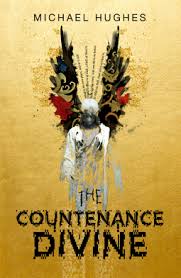
Note: the author and I share a publisher and an editor, so I was always going to be well-disposed towards this novel; the gorgeous gold cover helps too. Note two: I acquired a proof completely accidentally, and no one has asked me to review it; I wanted to because I enjoyed it so much.

The Countenance Divine opens with Chris, a computer programmer who is working to fix the Millennium Bug. The prose in this section is somewhat monotonous, corresponding to Chris’s nerdy character, but the unfolding story is intriguing. In Chapter Two, we meet another narrator, who writes letters of murders and dismemberment ‘from hell’ in an entirely different register. Wisely, his grisly, phonetically-spelt contributions are kept brief, and we are soon on to the next narrator, William Blake, who is in some sort of communication with John Milton. Finally, we meet an acquaintance of Milton himself.

Hughes is completely in charge of voice, his other occupation of actor perhaps giving him an edge in this department. The plot moves back and forth between 1999, 1888, 1777, and 1666, and the reader is whisked along, aided by formatting signposts such as ‘from hell’, or numbered sections, or simply by stating the year, so that it is never confusing. This weaving of voices and time-periods has echoes of David Mitchell’s Cloud Atlas, and there is also a touch of Harry Potter’s fantastic struggle between good and evil, but strictly for grown-ups who like poetry, and don’t mind disembowelments.


Trilocation

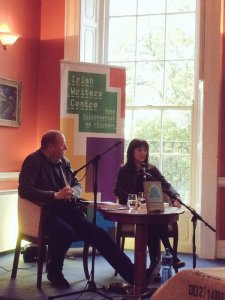
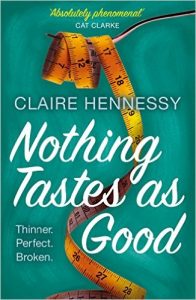
First up for my Thursday evening was the launch of Nothing tastes as good by Claire Hennessy, who tri-locates everyday, as far as I can see — busy woman. I then hightailed it up O’Connell Street to my class in the Irish Writers’ Centre, where the hope is that some of Eithne Shortall’s journalistic nous will rub off and speed up my painfully slow review-writing process.  I skipped out a little early to catch Henri McKervey’s interview with Martin Doyle for the Irish Times Book Club podcast—which she handled with her usual poise—then chatted to some of the assembled literati for a while. My hectic literary life, right?

Well, no. These days, even a single event is unusual enough. I have missed every single ILF event this year, and I’m not booked in to any of the many good festivals I could be attending or participating in. It can be hard to keep up, and there’s only so much shore-leave one can take, but the real reason I’m laying low is that I (as I can never bear to tweet) #amwriting. The WIP is at that agreeable, all-absorbing, everything-is-still-possible stage, and I don’t want to be doing anything else. It’s not a bad complaint.


CjZ2M20WYAEMhGj
pic from IWC twitter

nothingtastes-196x300


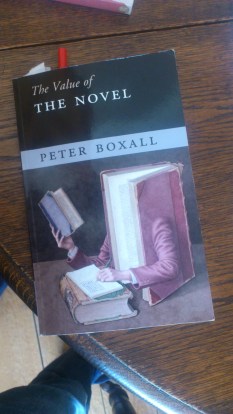
The Value of the Novel: mini-review

As a novelist, it was almost inevitable that I would enjoy a book which sets out to persuade us how, and why, the novel matters – and I did.

DSC_0117

The epigraph comes from Elizabeth Bowen’s from Notes on Writing a Novel:’The novel lies, in saying something happened, that did not’, and the book opens with an exploration of what realism is, via Zadie Smith’s essay, Two Directions for the Novel. The second part, entitled ‘Matter’, discusses how, in novels, ‘we propose bodies taking up spaces in the full knowledge that these bodies and these spaces do not exist.’ This is followed by a fascinating account of temporality in the novel, and the final chapter is The Novel,  Justice, and the Law. There is much to chew over in here; I highly recommend for anyone who either creates, or critiques, novels.


Getting things done

DSC_0099

Despite a trapped nerve which makes typing downright unpleasant, I’ve been getting things done. This, mainly; more anon, but suffice it to say I am very pleased to put this one to bed.

I’m also almost there on a big project proposal. And  novel three is already beckoning.

All I need is an amanuensis…