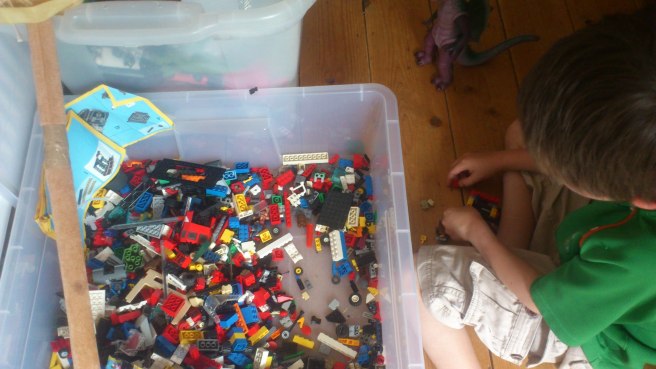
Like most writers at some point do, I’ve been thinking about the publicity side of writing. For Generation, I was delighted to do the events the publisher lined up leading up to and around publication, and a few others. It was fun meeting readers and other authors and talking shop. But – there it is – I quickly realised that going to events takes up a lot of time, time which might well be better spent writing, or ruminating, or cleaning the house, or building things with lego. It’s also exciting, in the sense of stirring one up, which is not, in my experience, conducive to reflective work.
How much time and effort does an author need to put in to publicity? Sometimes a book is so heavily promoted that it just turns me off. Or, I succumb, only to discover that it doesn’t nearly live up to the hype, which makes me resentful, and I don’t want my books to fall into this category. But I’m too new at this game to know whether it’s ok to sit back from all that busy self-promotion, or not. How much difference does it make to book sales? Does it help one’s author profile, whatever that is, and does it matter, and to whom? Is it just an ego thing – I’m on a stage, look at me, listen to me? Or, does it make all the difference to the public’s perception of the book? I’ve signed up for a Promoting Your Book day at the Irish Writers’ Centre because I want to hear others’ thoughts on these questions.
What I do know is that book promotion is not the most important aspect of writing. I haven’t read read James Kelman (I plan to start with his new one, Dirt Road, once I get over my pique for not being the one who came up with the idea of writing about immigrants in the American South featuring Zydeco music), but I’ll give him the last word on the subject:
Balancing this, his young central character Murdo performs music as a collaborative act. Never competing for applause or chasing monetary reward. Might this be his (Kelman’s) own creative manifesto? “Well that’s a good way of putting it, as a creative manifesto.” Then he tells a story. “There’s a great quotation by a Texas musician. He’s asked why he’s never made any dough – and he’s a good name, this guy – his response to the question of why he’s still scrabbling around, he said what he’d come to realise was, ‘I want to live my life doing this.’” There is a pause. “That’s how it equates for myself.”’ (From Alan Bett’s The Skinny interview)

