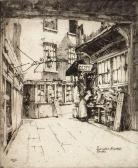
Today’s Irish Times reminded me that commemorative events are underway to mark the 100th anniversary of the sinking of the Lusitania. Click the Irish Times link to see a fab picture of the ship that I wasn’t sure I’d be allowed to reproduce here. Full details of the commemorations are at Lusitania 100.
A while back, I wrote a very short story called High Tide (below), set in the house of my great-grandmother, Ellen O’Donovan, in Sunnycove, West Cork and based o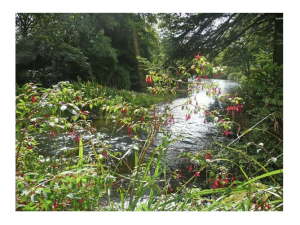 n some of the events of her life, including the sinking of the Lusitania, and her job, as professional registrar, of accompanying the washed-up bodies to Cork city morgue.

HIGH TIDE
Ellen is writing up her books when she hears her son’s cries. He knows not to disturb her when she’s working so she puts the Register quickly into the drawer and gathers up her skirts. She finds him, staring at something in the water.
— What is it, in the name of God?
The tide doesn’t usually come this far up Sunnycove, and Michael isn’t supposed to go so near the edge. Then she sees what has him transfixed: a human foot, lifting and falling with the ebb and flow. She blesses herself.
— May the Lord have mercy on his soul. Her soul, she corrects, seeing the flutter of lace caught on a reed. Run, Michael, as fast as your legs will carry you, and fetch Father O’Regan.
The lad turns and flees.
She has been expecting this for twelve years, but it doesn’t make the shock any less. You never stop searching. Missing at sea, presumed dead, the papers said. The search lasted a full week but no trace of Mike was ever found. He’d gone out sand-lighting with Marty O’Sullivan, God rest him, for the sport of it. Marty’s body was washed up the first day, and that was a great help to poor Mary. Without a body, they could have no funeral, no proper mourning for Mike. Father O’Regan held a service, but for Ellen, every day started the same way, scanning the inlet through the bedroom window before anyone else in the house stirred, every day watching, hoping, waiting to say goodbye.
The first woman relieving officer in Ireland is a success, the papers said the following year. Necessity, perhaps, suggested to the widow that she herself could, if appointed, fill the post just as satisfactorily as her husband, and the Board of Guardians appointed her to the position.
Necessity indeed. Only a month after the search was called off, by now heavily pregnant with Michael, her sixth, Ellen had travelled the forty-six miles to Cork to persuade the Local Government Board to let her do Mike’s job. She sat very still while Mr. Theodore Banks, Secretary of the Board, re-read her letter.
— What you propose here is very irregular, Mrs. O’Donovan. ‘… inspired by the sight of Marty O’Sullivan’s widow shoveling boatloads of bird-excrement, I thought that I too might venture to wield the tool of my husband’s trade…’
But there was a hint of amusement in his expression and, emboldened, Ellen reached into the heavy bag she had carried with her, and withdrew the leather-bound Register of Births, Deaths, and Marriages. She opened it at its most recent entry and passed it across the desk.
— There were three babies born, and two souls departed, besides Marty O’Sullivan. There was no one else to record them…
Mr. Banks examined the entries.
— Well, your penmanship is of the finest order…
— Thank you, Sir.
— And you have kept the books in a most accurate and satisfactory manner… He leaned forward. I’m sorry for your trouble, Mrs. O’Donovan. Mike was a fine man…
— Thank you, Ellen said again.
He closed the book and slid it back to her.
— We would be very much obliged if, on a trial basis, you would continue on in the position of Relieving Officer.
There’s talk now that her field of employment might be thrown open to women candidates in future as well as to men. You can fit it around the children, and it’s satisfying work. A column for everything, everything in its column: relieving monies in, relieving monies out; being born, dying. All neat, and tidy, and accounted for.
The limb has already grown waxy, unreal-looking. Against the fuschias, dripping blood-red flowers into the dark water, there’s even something beautiful about it, like a painting. Ellen knows if there’s anything left of Mike it’s bones, not flesh like this. Yet a sort of relief washes over her as she lifts her gaze from the pale limb out to sea. At least this poor craythur would get a decent burial. Lusitania Torpedoed Off Old Kinsale Head, yesterday’s headlines read. She wonders how many more bodies the tide will bring.
____________________________

 despite Biss’ lucid sentences and stylish blending of personal history with the wider issue of vaccination, which sustained me for the first quarter, I found it harder and harder to keep picking this book up. I’ll grant that I have read reasonably widely on the subject of vaccination, but for me On Immunity added nothing new to the debate. Overall, I was disappointed.

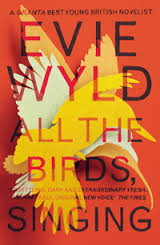

 pt coming back to the idea of openness, in short, not defining what the imprint would and would not be about, which was refreshing to hear in an industry that can sometimes seem to us authors to be about drawing lines and putting up barriers. He said lots of nice things about our books, too. Then there was the bar, and the food, and the new, interesting people to meet. It all went by in a bit of a blur.


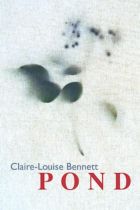
 ough to agree to be interviewed by a complete amateur – me. I had the most selfish of motives: to hear her seasoned thoughts on all things short story, in particular linked short stories, my own particular obsession at the time. She was so generous and frank with her answers that it would have been criminally negligent not to put the interview into the public arena. I was delighted when Maurice at Dublin Review of Books (drb) agreed with me.