The Printed Word Is On Borrowed Time: Cork International Short Story Festival


‘Being solitary is a sick way to behave,’  was Patrick McCabe’s opening when asked by Kevin Barry about his move towards writing for stage. 
McCabe went on to express concern about who he was doing all the work for. Where was the audience gone? ‘Grand Theft Auto,’ replied Julian Gough. And we were off. 
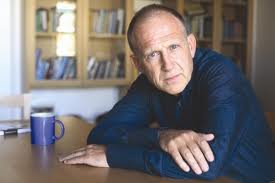
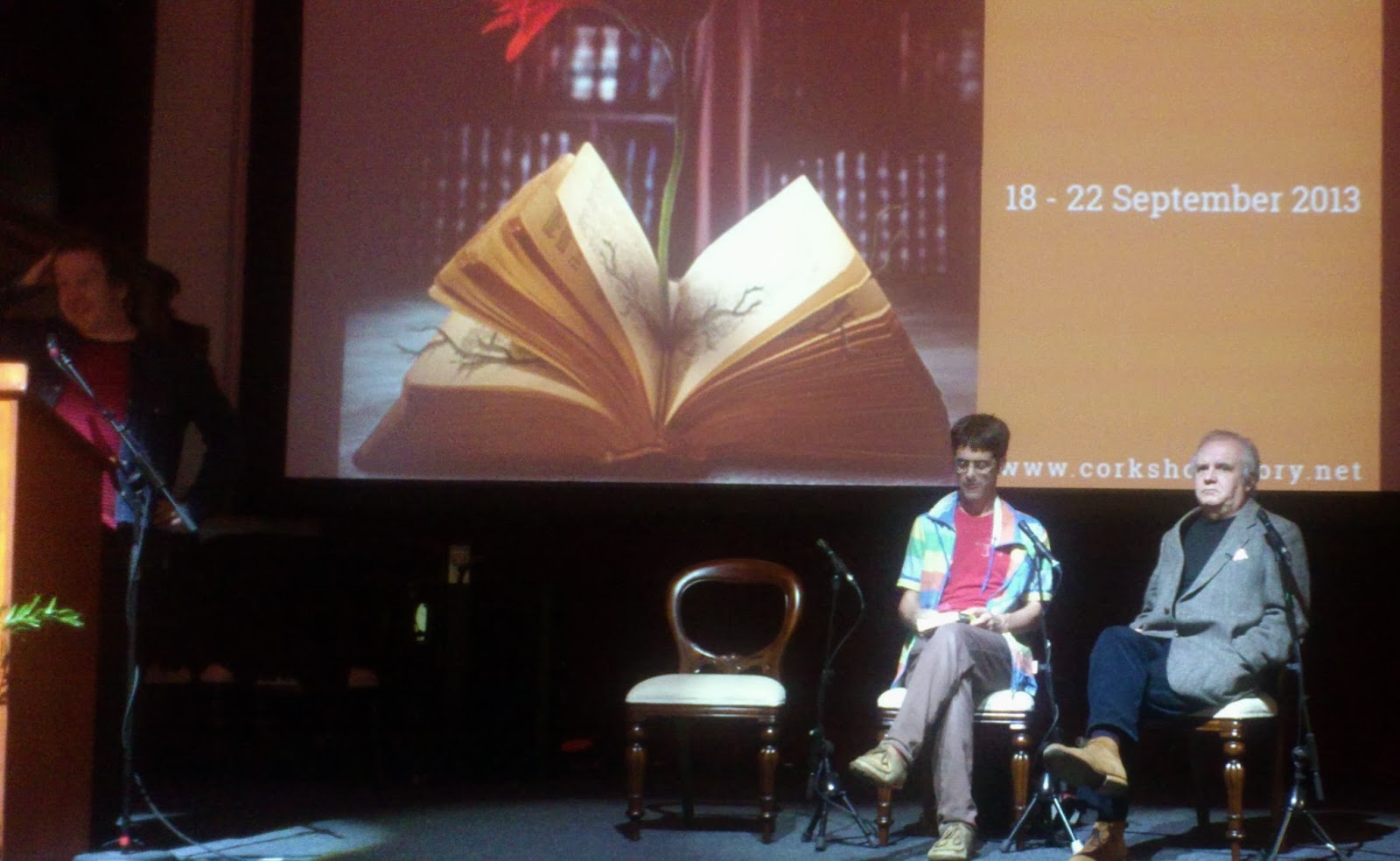
The occasion: Cork International Short Story Festival. The event: Julian Gough & Patrick McCabe in conversation with Kevin Barry. 
The printed word is on borrowed time, said Julian Gough, clarifying that he meant the book, not the word. The novel is not obsolete, it’s just shape-shifting. Nowadays, writers can write for Breaking Bad. Like the 70’s, Patrick McCabe agreed, when people didn’t know how to write for tv so they experimented. He worried that the novel might become a strictly academic pursuit, a bourgeois activity. 
To Gough, ‘computer games’ can be anything. You can code any text, combine sound/image/etc. ‘It’s completely up for grabs.’ In this context, he says, the novel is a limited game adventure with no choices. His point was that there are lots of ways of telling stories.
Patrick McCabe pointed out that these did not replace the experience of reading a Banville or a Nabokov, or Yeats’ The Second Coming, or any great stylist. But, Gough replied, it’s coming to the point where it’s inorganic to write a Lolita now, that it’s almost retro. ‘What about poetry?’ McCabe asked. ‘It’s outside the market,’ was Gough’s reply. 
McCabe opined that the ‘cult of prize-giving’ was an unfortunate development, wondering what it said about the people who didn’t win. Gough agreed. Prizes were meant to draw attention to the novels winning them, but they became an excuse not to pay attention to anything outside the competition, making it difficult to make a living from writing. Kevin Barry said that he says no to absolutely nothing. All three agreed that there was no golden age when things were different, that writing has always been a vow of poverty. 
The discussion returned to the future of the novel, if it had one. We, the audience, worried. We wanted to know.
The technology (for printing 250-300 page books) is over, Gough declared in response to an audience question on the length of novels such as The Testament of Mary and Chesil Beach. The novel’s time is past, and now it will disintegrate. But at least it liberated writers to be able to write exactly the length they want.
The heckler in the back of the room could take no more morbidity. Declan Meade, from the coal face that is The Stinging Fly, argued that the situation was not as bleak as Gough painted it, that in Ireland the situation was currently very healthy. 
McCabe warned that we should not forget the notion of the artist, that we don’t write just to sell books but to make sense of the world. For McCabe, writing is ‘like breathing. I couldn’t negotiate the world without it.’ 
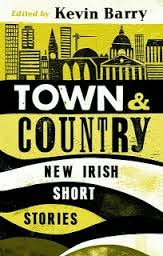
The three writers were grouped together in the festival for their shared dark humour (I presume), and the readings from McCabe and Gough, from their stories in Town And Country, were very, very funny. Barry traced his literary lineage back through McCabe and Flann O’Brien to Laurence Sterne. 
McCabe talked about how Free State Ireland was prized, above all, for ‘the long, grave face’. ‘Then along came Borstal Boy.’ He told an anecdote about Brendan Behan stealing a Procession to Mary placard from the Blue Army of Our Lady and shouting ‘Up Hell! Down with Heaven!’ For McCabe, the appearance of Borstal Boy and The Gingerman in that climate were ‘like grenades going off.’ He told us that, having already written ‘the long, grave face’ novels’ where characters said things like: ‘I’m home to bury the brother,’ it was time to try something else. ‘Time to get a tab of acid,’ someone quipped.
It was wonderful to be there, in a roomful of people who truly, deeply care about writing, and many thanks to the panel, and to all the panels in the Festival, and to Jennifer Matthews and all those who organised it. 
Barry tried to wrap up ‘so we can go home to our tea’, but in the end, we had to be thrown out.
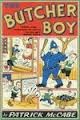
P.S. The Butcher Boy disturbed me in ways that I’m still counting, and as we left the beautiful Triskel Christchurch I was delighted to have the opportunity to tell Patrick McCabe just how much. I think he was pleased…
Penguin Ireland / RTE Guide Publishing And Marketing Day

As promised, some nuggets gleaned from a very full and very enjoyable day…

  • The market is not what it used to be, editors are buying fewer new books. 
  • On the other hand, it’s a really good time for short story collections, both in mainstream publishers and in ’boutique’ outfits. (Submissions should consist of 3 or more stories.)
  • Faith O’Grady (agent) take on very few novelists. She judges a manuscript quickly, usually in the first 20 pages,  get a sense almost immediately, in the first paragraph. But it’s about personal tastes, so if you’re rejected, keep going.
  • The importance of the pitch was emphasised by several speakers on the day, though Faith added that despite its importance we shouldn’t spend the rest of our lives working on it!
  • What is unique about your book? Go to the bookshop and figure out where yours fits.
  • Your novel should have international appeal (but then, fiction should be universal).
  • The story is the most important thing. If you’re writing literary fiction, language is really important.
  • Hooks – again emphasised by several speakers.

  • Writing takes inner confidence, discipline and talent, and it takes time to get all these right. 
  • Writers’ groups can be very useful.
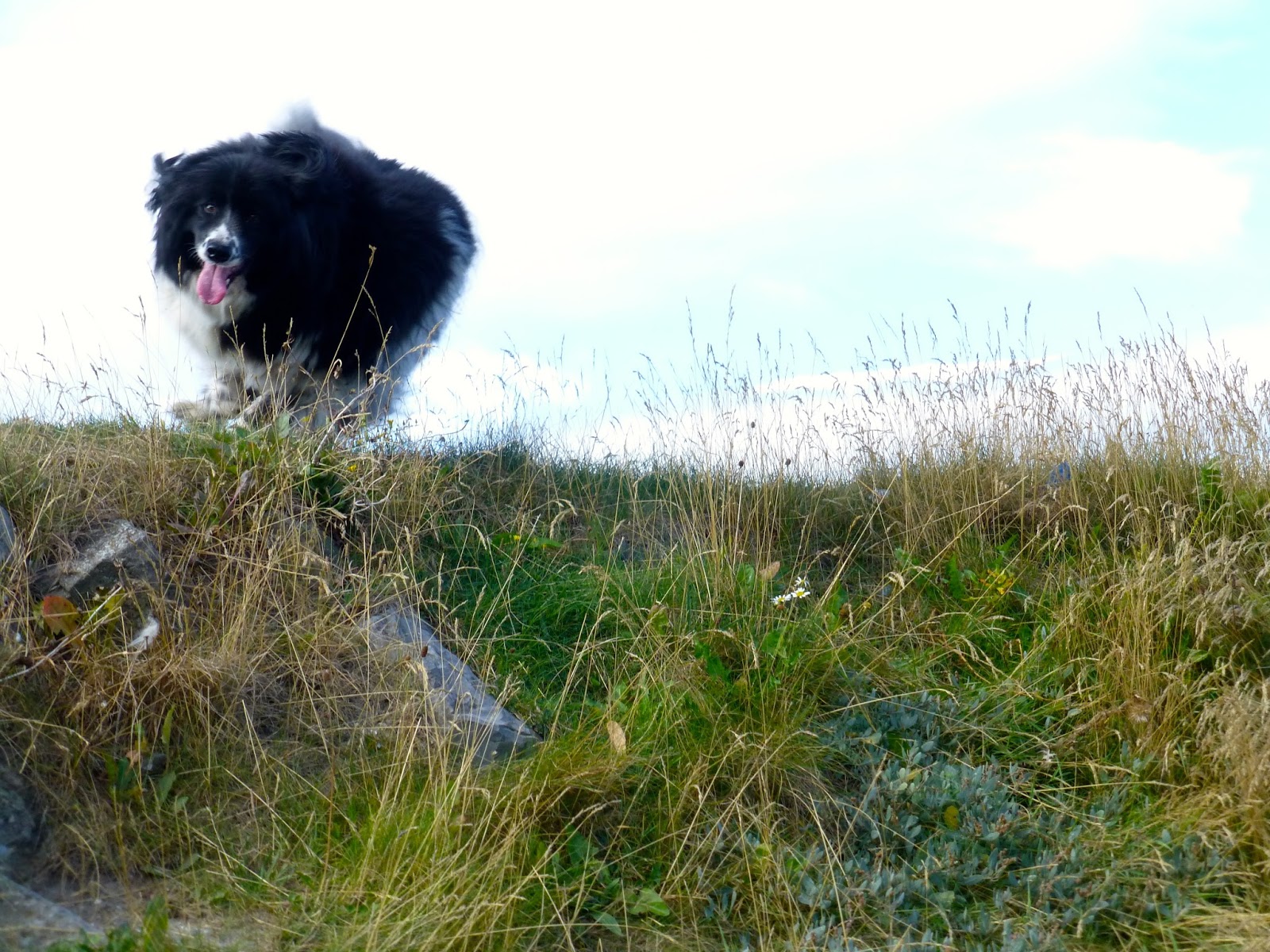
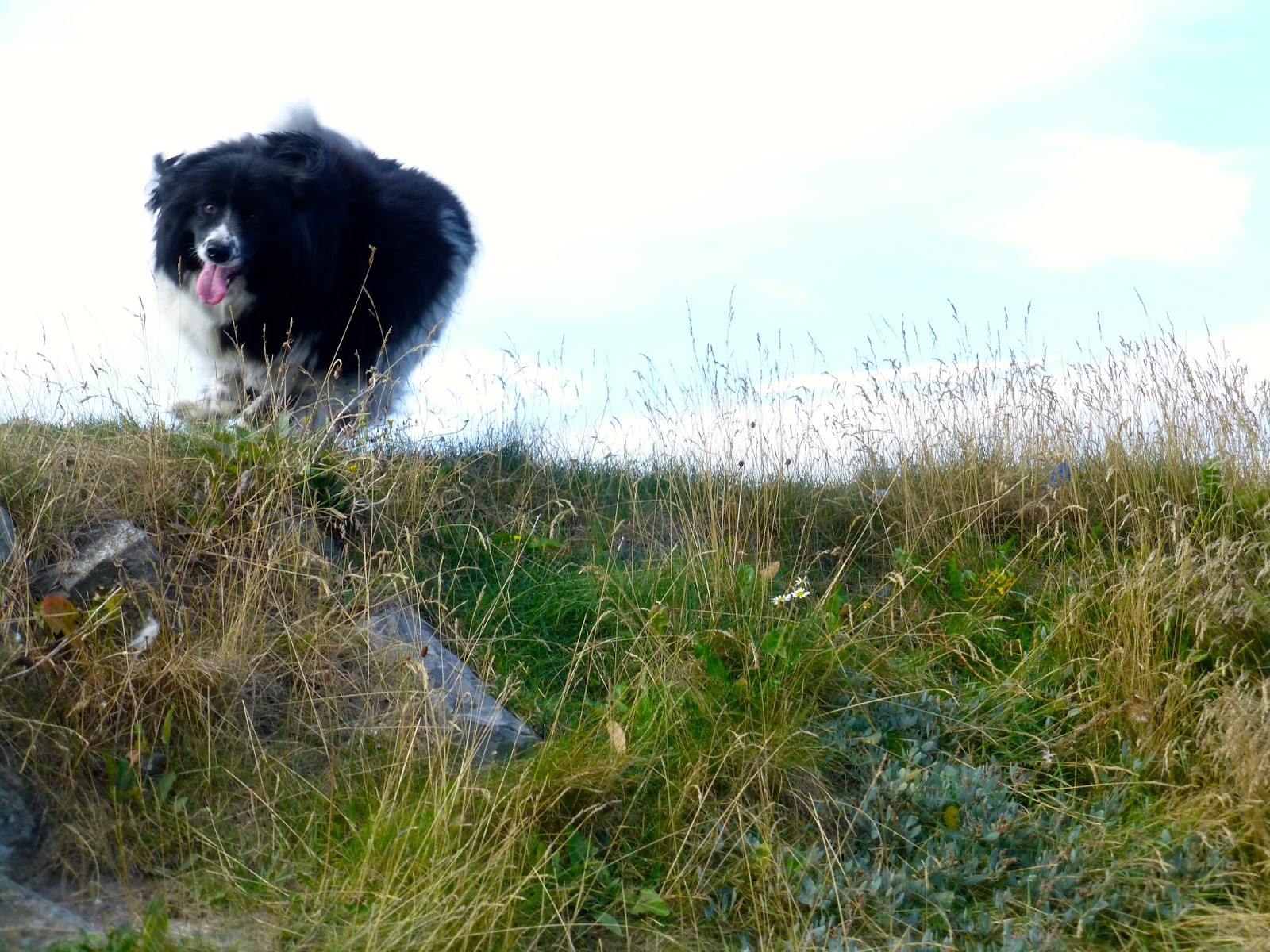
  • Having an online presence unanimously accepted as a good idea. Advice on blogging: blog about your dog (or cat, if you must). So, here’s Tess one more time… Or something you’re interested in. ‘Buy My Book’- style pushy social media is no longer enough/tolerated by soc media consumers. 
  • The public needs to hear about something 4 times before it sinks in.
  • Manage your expectations; there’s a lot of competition out there.
There was much, much more, positive and cautionary, but I’ll save it for another post.

Blog About Your Dog

“Tess” courtesy of @sing2heart (Thanks Keili!)

Those of us used to entering writing competitions are also used to having our entry met with complete silence, finding out that we didn’t win (again) only by accident or deduction. Not so the Penguin Ireland/RTE Guide short story competition which, in an altruistic gesture towards The Literature Project, offered a writing and publishing day for all those who made the longlist. [You can read the great winning story, Soft Rain, by Trisha McKinney here]

I was lucky enough to be there, and it was a jam-packed day, with talks from Jane Alger of Dublin UNESCO City of Literature, Patricia Deevy of Penguin Ireland, three Penguin authors (Sinead Moriarty, Niamh Boyce and Mary Grehan), Faith O’Grady (agent), Rachel Pierce (editor), Cliona Lewis (Penguin Publicity Director) and Donal O’Donoghue from the RTE Guide and Stephen Boylan, Easons Book Buyer. I took pages of notes, and I hope to plunder them in due course and share the gems with readers of this blog.

Meantime, as many of the speakers touched on social media and the effective use of same, I thought I’d follow up on one tip right away and blog a picture my dog!

(Not) Just Another Back-To-School Post

At the risk of this sounding like just another desperate end-of-August blog post from another desperate writing parent who hasn’t written much more than a cheque in weeks, as the parent of twins who are starting ‘Big School’ on Monday this end of August is more than just another end of summer holidays; it means we survived.

In the true spirit of September prep I bought the new schoolbags and lunchboxes, the tracksuits and pencils, but because it’s a special ‘Big School’ September, I also made Big Resolutions: this morning I opened a new Scrivener project, Novel format, which I’ve called WIP-Sept-13.

Currently, I have one novel under submission and a new novel-in-stories at first draft stage which I don’t plan on revisiting too soon. So what to do – a question complicated by the fact that my next MFA tutor/peer input won’t take place until January?

Unbidden a few weeks ago the mysterious creativity genie threw me a character, the world(s) she inhabits, and the thing she wants. I tried to ignore it – as you do; these ideas-which-might-be-novels are a lot of hard work – but it hasn’t gone away. It might fizzle into nothing like a firecracker, but it also might be the beginnings of a novel. I figure it’s at least worthy of space on my computer. WIP Sept 13, as of Monday, here I come.

From Hanumanasana To The Penguin/RTE Guide Longlist

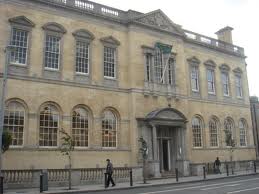
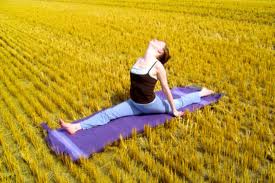
The last time I was in this beautiful building on Pearse Street I was teaching a yoga class.

I’m excited to be visiting again in September, this time as a long-list-ee in the Penguin / RTE Guide / City of Literature short story competition. I’ll be in the illustrious company of Patricia Deevy (Penguin), Faith O’Grady (Literary Agent), Niamh Boyce (The Herbalist), and others, not least the other longlistees, who happen to include my sister who’ll be coming all the way from France. There will be talks on literature and publishing, a workshop, the prize-giving, and a free lunch – all good!

I’m especially pleased that the story I entered, Box of Rain, was taken from the novel-in-stories I’ve been working on, the first draft of which I’ve just finished. It’s encouraging at what is, as any writer will attest, a delicate stage…

And for your delectation, lest you think this blog peddles only in fiction, here’s a pic from that other life…

The Forty Foot And The Writer

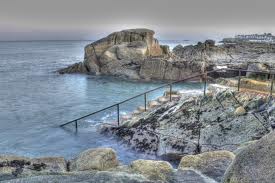
My relationship with swimming is a somewhat chequered one. In the past, I’ve been fished out of the River Barrow by my friend’s older brother, fished out of a public pool (ignominiously, by something resembling a giant tadpole net minus the net), laughed at for being very white (in Italy), and for running screaming from a lake in the Tirol (what? it was full of water snakes). This is why swimming in the Forty Foot, above, found me facing my fears, most of which were focused on what the name implies, i.e. the forty watery feet which would be below me.

But, as a wise woman once said, feel the fear and do it anyway. So, with dry mouth and stomach full of butterflies, I descended the concrete steps, fingers white-gripping the stainless steel rail, and entered the cool waters of the Irish Sea. “Can you still feel the bottom?” I asked my companion anxiously at five-second intervals – with all the unconcern of the wetsuited that he, un-be-wetsuited, could probably not feel his legs.

Reader, I did it. Doggy-paddled in the forty foot, never more than a few meters from the steps, and probably only a few inches out of my depth.

But what lessons for the writer?

1. When you have come to the end of your first draft of a novel (or a novel-in-stories, as the case may be), and have set it aside, and during that set-aside period instead of painting the house or cleaning the house or feeding the children you get an idea for another novel, there may be nothing for it but to dive in. Otherwise you could find yourself engaged in daft personal challenges egged on by daft eighties self-help books.

2. Bad idea getting into the sea right beside the James Joyce Martello Tower which can’t fail conjure the idea of wading into a sea of green snot.

3. Find better ways to describe the physical manifestations of fear. ‘Dry mouth’? ‘Stomach full of butterflies’? I mean, really.

Novelist Or Short Story-ist: Which One Are You (And Does It Matter)?

Ben Goldstein/Studio D (Esquire)

It’s a question I’ve been asking myself lately.

I’m mid-way through my MFA at UCD now, and last semester I was privileged to be able to audit Eilis Ni Dhuibhne’s Library of the Imagination short story course. We examined the history of the form through some of its best practitioners: Chekhov, Joyce, Carver, through post-modernism, Alice Munro, Kevin Barry, Claire Keegan, to name a few. But while there was some theory, there was more reading and still more practice, and always much discussion. It was a productive semester for me, and an opportunity to try out different styles and ideas.

It both fed into and distracted me from my work in progress, also my MFA thesis, which began life as a short story Auslanders; the plan was a short story collection. But ever since seeing Short Cuts, the Robert Altman movie based on Raymond Carver’s stories, I loved the idea of linked short stories, so Auslanders extended into a linked short story collection. I have tried this before, but my characters blended into each others’ lives and became my novel, Michaelangelos; the links were just too tempting. As with Michaelangelos, my linked stories have morphed into what is now a novel-in-stories.

It’s this morph-point that interests me most. For me, it happened when the story I was working on went over the 10,000 word mark. It was self-contained, and something happened to someone, yet it didn’t feel like a short story (or a novella); it was begging me to explore further some of the characters and ideas outside of the story itself, yet the story itself could not have merited novel-length.

It’s not a complete coincidence that my reading this year includes the Booker short-listed The Spinning Heart by Donal Ryan, which tells its relatively slight plot through more than twenty points of view —  poly-morphic novel, or novel-in-stories? — and A Visit From The Goon Squad by Jennifer Egan. In both these books the individual stories, or some of them, at least, are self-contained, but in both there is a broader story — a novel. I changed nothing except my idea of what the work-in-progress is, yet everything about the writing changed, I think (hope) for the better. I felt freed up to write into the past, into the future, and in settings from Mexico to Canada, even though Chicago is at the centre of the book.

What are the differences for the writer in writing short stories and writing novels? Any thoughts, especially on the point where the two cross over, are welcome!

The Language Of The Body: Italian Ways 3/3

Tim Parks

I’ve met Tim Parks (at a Chekhov workshop). He looks English. To me, at least. It’s his colouring, his posture, the way he walks. Or am I relying on racial/cultural stereotyping to come to this conclusion? Would I have known he was English if I didn’t already know who he was, if I had just passed him in the street?


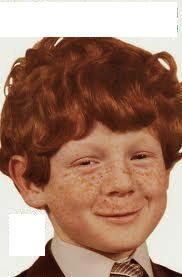
What makes a person look English, or Japanese, or Irish? [No prizes for guessing the nationality of this boy!]

This question seems to be a bit of a bone of contention with Parks in his book Italian Ways. In the course of his train travels through Italy, he is constantly irked when Italians speak to him in English before he’s even opened his mouth. He doesn’t understand how they know he’s not Italian.

Where I sometimes go to write, in the library in Trinity College, I see tour groups through the window of all nationalities queuing up to see the Book of Kells. My guesses as to where they’re from are usually right. It comes down to what they are wearing, what they use to carry their belongings, whether the men have beards and/or sideburns, how they wear their hair, what accessories, how they walk, how their facial muscles move when they talk, how they respond when the group leader is speaking, how they interact with each other… The list goes on. It’s not foolproof, but the clues are usually there, in the language of the body. Parks understands this language too:

The nose is the dominant feature, long, thrust forward, slim, very slightly hooked. The eyes are large and very carefully defined with make-up, the eyebrows plucked in high arches. The forehead slopes back at quite a marked angle, accentuating the nose, and the thick raven hair, which is firmly gathered and swept back, is held tense and tight by a headband and three long wooden skewers, poking up and out at spiky angles…

His wonderfully observed description of a typical southern Italian woman’s face is that of a fully tuned-in writer. Perhaps, just as it’s easier to solve someone else’s problems than one’s own, easier to spot other people’s faults, it’s also easier to detect characteristics, and sometimes national characteristics, in others than to define them in ourselves. It’s forgivable that he can’t define his own Englishness as succinctly.

What I don’t understand is why it should bother him — what’s wrong with being taken for what he is, an Englishman who lives in Italy?

Not A Book About Trains (Or Food): Italian Ways 2/3

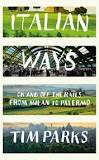
I admit, as much as I love Italy, the idea of 260 pages about Italian train timetables and ticketing systems was less than inviting. But I like Tim Parks’ writing, and I got Italian Ways courtesy of Harvill Secker via Twitter, so I got stuck in.

And what you get is, indeed,  lots about timetables and lots about Trenitalia’s labyrinthine ticketing system.

But. And it’s a big But, probably the same But Parks used to convince his editors that this was a book that had to be written: ‘This is not a travel book. And it’s not a book about trains as such…’ The narrator Parks attempts to explain to his hosts in Sicily how the train system manifests itself in anything the people of that culture do. 
‘Like this routine Sunday dinner of yours, every week, the same friends on the warm terrace, the things you prepare, the way it’s served, the things you talk about, even the way you invite and tolerate a foreign professore like me. All Italy could be teased out from this if we examined it carefully, the clothes you are wearing, the way you’ve laid the table, the pleasure taken cooking, the wine glasses.’
‘The way people drive,’ one of his dinner companions adds, as a car roars past.
The secret, Parks tells us, is in the details, a point worth remembering for any writer. In the details of the train system of Italy Parks is writing about all of Italy. This is not, as he warns, a travel book; it’s joining the party by climbing over the fence instead of coming in through the front door. And it’s a compelling read. Any detailed discussion of the trains of Italy include by default the geography, the history, the politics, the culture of the country. Instead of a litany of galleries and beauty spots, Parks’ Italy feel real. For me, it provides a glimpse into what living in Italy as opposed to visiting, the affair as opposed to the marriage, might have entailed — for better and for worse.
I hesitate to use the word reservations after reading Italian Ways, with all its connotations of confusing supplements, carriages classes, and category of train — but I have a couple. Often, Parks mentions the photos he’s taking, of graffiti, of stations, of scenery, of people, and as well as he paints pictures with his words, I’d have liked to see a few in the book, even black and white. Not to include any seems rather out of step with the times, where we only need to half-form a thought to be able to see it online. I found myself supplementing Parks’ descriptions with Google: that church in Lecce, that fence dividing Trenitalia from its competitor, Italo.
And while I accept this is neither travel book nor cook book, I wanted more about the food. (To compensate, I’m including this random pizza pic.) Perhaps he was just holding back from us, but I got the impression that one of Italy’s most wonderful gifts, its food, was somewhat wasted on Parks (‘the things you prepare, the way it’s served’) — and I don’t eat meat either, so that’s no excuse! 

Italian Ways 1/3

I recently had the dubious honour of winning a punning comp via twitter, but what’s pride when the prize is Tim Parks’ Italian Ways, On And Off The Rails From Milan To Palermo (‘Nearly had something witty but I lost my train of thought’. Knew you’d want to know). Just leafing through the first few pages was enough to send me on tangents of Italian ways and days of my own.

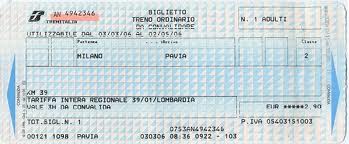
Like Parks, my first introduction was courtesy of an Interrail card, which took me from Venice to Florence to Rome in about three days flat. My photos from the time include one where I’ve just bought a Wham-style bat-wing soft leather jacket from a stall and I am very pleased with myself. My favourite memory is of sitting on the Spanish Steps, with Babbington’s Tea Rooms to my right, and the room where Keats died to my left. I pined (in my way, lapping a pistachio gelato, my first pistachio, my first gelato) for the young, dying poet. I was a bit jealous, to be honest. I suspected then, and it has indeed come to pass, that I would not be mourned for my dead young genius.

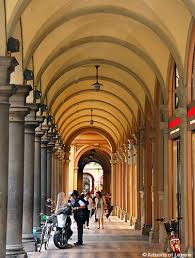
I’m a bit of an expert in gelato now, and I can order uno cappuccio with the best of them. I’ve made several trips to Bologna, with its famous red roofs, university, and novelist, Umberto Eco. I agreed to travel by scooter with a handsome boy to an all-night disco in the hills on the half-promised that he would introduce me to Eco (he didn’t). Mostly, though, I wandered around the streets under the porticos imagining that I could live there, that I was as entitled to the ochres and the umbers and the endless sunshine as the next person.

A much later trip, a family holiday, found me in Umbria, in a perfect Italian village with winding, cobbled streets. Many years later, San Donato would provide the inspiration for my novel, Michaelangelos, in which my elderly protagonist Selina struggles with the immigrant plight of being both Irish and Italian, living in Dublin but missing Italy. It turns out that most of Ireland’s Italian ‘chipper’ community hails from a nearby village, Cassalatico. I knew none of this then, as we wrestled with 40 degree temperatures and apartments without air conditioning. In the end we cut the holiday short by a week — a sacrilege. My favourite memory is of my father ordering coffee. Espresso was fine, he insisted. We warned that it was very strong, and that he might prefer a cappuccino. When it arrived he decided it needed a drop of hot water. The cafe owner brought some in a jug. Then a drop of milk. The owner brought steamed milk. The coffee was just right.

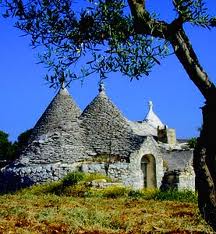
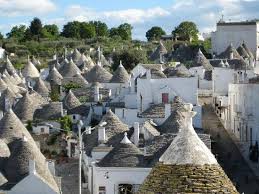
My last trip was too long ago, about seven years. I went with my sister to view Trulli For Sale. These are curious, conical-roofed little houses that look like they house elves. I liked the circular rooms and their isolated locations. We would live on olives and grapes and the walnuts the locals (us!) gathered in fine nets on the ground around the trees. Maybe this trip coincided with a certain stage of life…

It rained that trip. Torrents of rain streamed down the windscreen as we tried to navigate our way into the town of Lecce in our rented car in the dark, only to discover, eventually, that the centre is car-free, and we were restricted to park in the perimeter only. Cue dragging suitcases through puddles and soggy map-reading. But the hotel was lovely, right in the centre, and the dinner and wine incomparable.

When we met our estate agent the next day, in a restaurant as he had suggested, we began our acquaintance in a most civilised manner, with glasses of pinot grigio which arrived with  condensation dripping off the ice-cold glasses. It was a good start. After a leisurely chat, and some olives may have been consumed, he drove us all around Puglia to view trullis. Some were pristine to the last stone, but most were fixer-uppers, abandoned and falling down in the corner of a rocky field, for all the world like the famine cottages in the West of Ireland. There was something poignant about them. As we poked about in their ruins, imagining how families lived in the small rooms, I realised I would never buy one of these houses, and that I most likely would never live in Italy. I didn’t know the people whose graves it felt like I was walking on, I didn’t know their language beyond a few lessons, and the small foray I’d made into the house sale process showed me that I didn’t understand the bureaucracy, the system, and most likely never would. Italy was for visiting, for having an affair with, not for marrying.

Tim Parks, however, decided to commit, and has lived there for some thirty years now. More on this in the next post.