A Few Thoughts On Transitions

Changes of time, and changes of place; how do we get from A to B in fiction? In the beginning, we wonder whether to fill in all the bits that take the character or narrative from one time or place to another. ‘And then… and then… and then…’ is one solution, familiar to primary school teachers. A better strategy might be to consider how it’s done by those who know what they’re doing.

In Katherine Mansfield’s The Garden Party (with thanks to David Huddle’s ‘The Writing Habit: Essays)

“Must they be hidden by a marquee?”                                                                           (New Para) “They must. Already the men had shouldered their staves and were making for the place.”

While Laura is wondering, the workers have moved (from A to B) to begin setting up the marquee. Mansfield has made the transition and we hardly see how she did it, while she simultaneously makes her technique work on another level: we are left to wonder whose voice is saying “They must.” The answer is Laura, the young teenage character, and an outside narrator.

We see Mansfield’s system of instant transportation in the next example:

“I’m going straight up to tell mother.’
“Do, dear,” cooed Jose.
(New Para) “Mother, can I come into your room?”,

whereas earlier we watch Laura leave the workmen to take a phonecall:

‘Away she skimmed, over the lawn, up the path, up the steps, across the verandah, and into the porch. In the hall…’

Both transitions work. It is Mansfield’s sure sense of timing which makes it possible to choose between the gradual transition of the latter example and the instant of the former.

Joyce, in Eveline, uses repetition of the word ‘home’. We are in Eveline’s consciousness and, as in our own consciousnesses one word or image or idea leads to another. Word association effects a seamless transition between paragraphs:

‘Everything changes. Now she was going to go away like the others, to leave her home.
(New Para) Home! She looked round the room, reviewing all its familiar objects which she had dusted once a week for so many years…’

Alice Munro’s trademark transition technique is to leave a blank line, then to jump straight in. She expects her reader to be prepared to work a little.

‘In the summer of 1979… making himself a ketchup sandwich.
(New Para)I have driven around in the hills northeast of Toronto, with my husband- my  second husband, not the one I had left behind that summer….
(Blank line)
In the coutryside where I lived as a child, wells would go dry in the summer.’ (Nettles)

Sudden shift or smooth segue? I think in part we make our transition decisions based on how much confidence we have in our reader. Too little, and we get a lot of tedious detail, extraneous to the story; too much and we risk confusing the reader, and jarring the narrative. What does anyone else think?

What Fiction Editors Want

  
‘After Keith Haring’ by Georgia        

Who among us would-be-emerging writers can afford not to know what kinds of books twenty-three of the UK’s leading fiction editors are looking to commission in 2013? Sometimes specific, sometimes ‘I don’t know much about art but I know what I like’, this compilation of interviews reassures us that editors are fully informed and extremely knowledgable about the world of writing, but at the same time human. It’s a reminder that while it’s a good idea to keep an antennae on what the market wants, we should only write what we want to write, and hope that the little bit of je ne sais quoi that many of the editors refer to finds its way in there. Thanks Henri and @alisonbarrow for pointing me to the link. 

Reading Lists

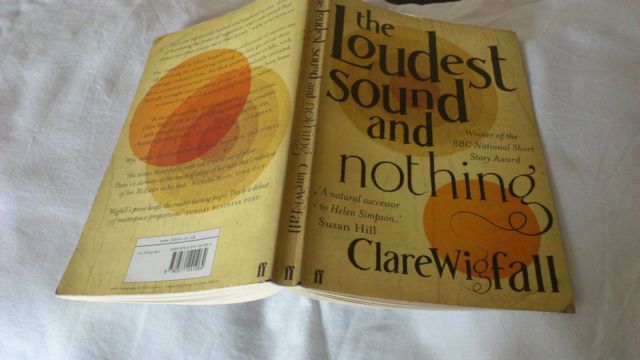
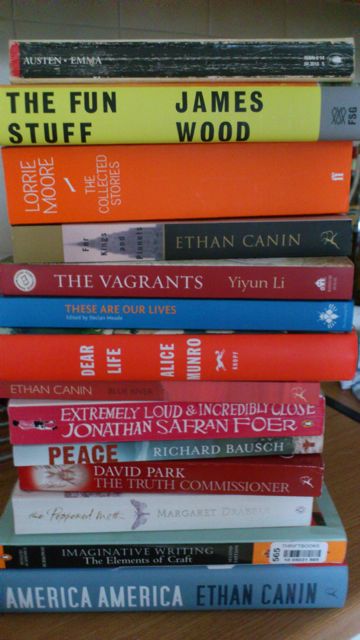
My sister’s ‘to read’ pile includes Thomas Hardy and Dostoevsky. She claims she didn’t just assemble it for our benefit… This is the lovely pile I hope to work my way through during the coming weeks and months, some re-reading – hello ‘Emma’, some I’m just very far behind, and some is brand, spanking new.                                                                            And this is the book I’ve just finished. It was on my list for too long, and it ended too soon. I’m looking forward to Clare Wigfall’s next collection in the Autumn.                                         What’s anyone else reading or planning on reading?

Edna O’Brien in Eclectica Winter Edition

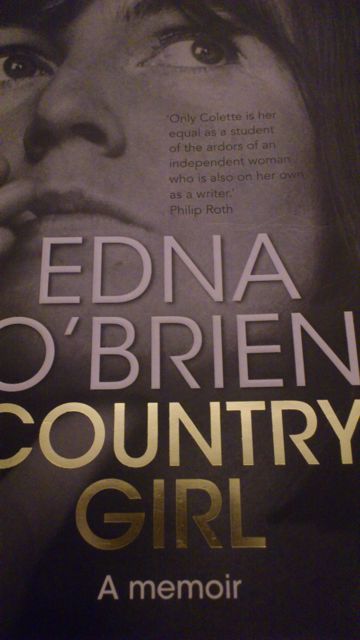
Happy to be keeping such good company in the winter edition of Eclectica with my review-essay ‘The Influence of Edna O’Brien’. I’ve spent lots of time in the company of Ms O’Brien’s work over the years, as humble reader, and as MA student in the nineties, and this year I’ve enjoyed revisiting her work and life in conjunction with her memoir, Country Girl. Hope you enjoy the piece. http://www.eclectica.org/v17n1/mcgrath.html

The Influence of Edna O’Brien

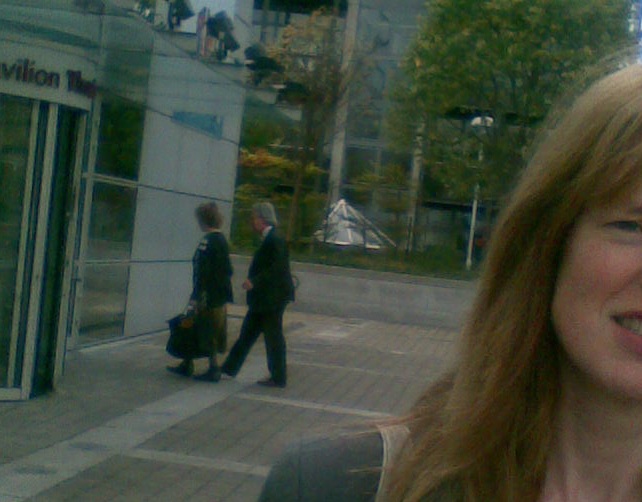
Edna O’Brien, outside the Pavillion Theatre in Dun Laoghaire at the Mountains To Sea Festival in 2011. It’s the closest I’ve ever been to her. But over the years I have met her figuratively, through her books, not least her recent memoir, Country Girl. I’m delighted to get the news that the iconic Eclectica, one of the oldest surviving online literary publications, will publish my review-essay ‘The Influence of Edna O’Brien’ in their Jan/Feb edition.

Try Something Different

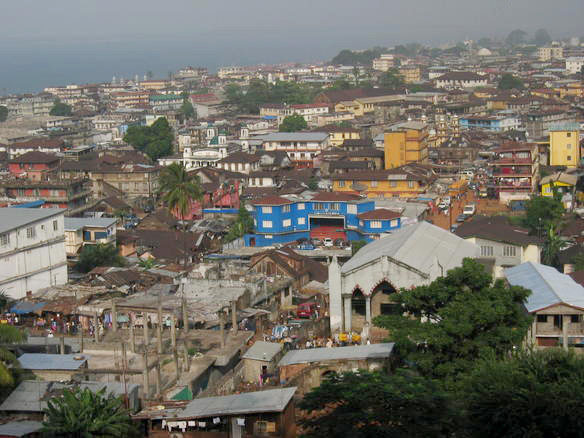
The very fine Ofi’s West African edition has just gone online with poetry in translation from Nigeria, Cameroon, Sierra Leone and Ghana  www.theofipress.webs.com

My story Auslanders can now be found at http://theofipress.webs.com/mcgrathpaula.htm

Here’s a taste from current Ofi Press, from the first African to be awarded a nobel prize for literature.

IN THE SMALL HOURS
By Wole Soyinka

Blue diaphane, tobacco smoke
Serpentine on wet film and wood glaze,
Mutes chrome, wreathes velvet drapes,
Dims the cave of mirrors. Ghost fingers
Comb seaweed hair, stroke acquamarine veins
Of marooned mariners, captives
Of Circe’s sultry notes. The barman
Dispenses igneous potions ?
Somnabulist, the band plays on.

…….

MA/MFA Reading

The MFA pulls in all directions at once: now an essay on Austen’s novel-construction skills, now a class plan for Pedagogy, a work-in-progress scene to write, a chapter to edit, a classmate’s chapter to provide feedback on. And last Monday evening, a reading. Read my story Auslanders at speed… Reading’s a skill too, it turns out. It was great to hear the quality and range of work being produced by the MAs and MFAs, and thanks to Eilis Ni Dhuibhne for doing the organising.