Langrishe, Go Down

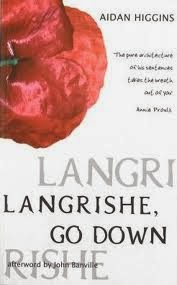
Recommended to me not once but twice in the space of a week, and only a lifetime (mine) since it was first published, how could I not put Langrishe, Go Down to the top of my tbr pile?

I’m a Kildare woman, and I’ve spent quite a few years studying English literature, but I had never heard of Aidan Higgins. I don’t know why; I don’t even have any theories. But when I opened it and began to read it felt as if my DNA was resonating along with the Kildare vowels.

—Grand evening, Helen said.
—Tis indade, grand, thanks be to God
…
—Not a-tall, M’am. Yarra, not a-tall. Sure you have it all to yourself. The gate’s open for all them that want to.
…
—…All you do hear all the year round is the birds and the Shinkeen flowin by.

The old people who lived around us, Miss Hickey and Paddy Loughman and Jimmy Loughman and Leo (Leo who?) came alive on its pages. Even the house had a name almost identical to the one in which I grew up. Given that it’s a book about the demise of a house, and a family, it sent a shiver.

The prose is sublime. ‘The pure architecture of his sentences takes the breath out of you,’ Annie Proulx says on the cover. I wonder again why I never heard of Aidan Higgins, and how Annie Proulx did! I let it go, let the language surround and imbue me, a 3D Word Picture of Kildare.

Spoiled For Choice: Cúirt and DWF

Eleanor Catton, Rachel Kushner, Donal Ryan, Julian Gough, Sebastian Barry, Eimear McBride, Colin Barrett, Emma Donoghue, Anita Shreve… 

There’s a fantastic line up of names for Cúirt (Galway) in April, and the Dublin Writers Festival (DWF) in May. Tickets are on sale for both. Time to get scheming.

TULIPS in Necessary Fiction

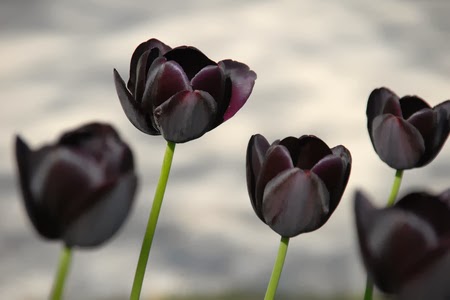
My story, Tulips, was inspired by Zbigniew Herbert’s fabulous, and fabulously orange, Still Life With A Bridle (see my earlier blogpost here), and by the property crash in Ireland.

There are some who think it’s too soon and too clichéd to write about property developers, but I don’t think we’ve even scratched the surface. In our eagerness to pin blame on the banker-developer-regulator trilogy we’ve developed a collective amnesia about our own collusion. Few of the chattering classes didn’t manage to buy an investment property or two, and tedious, self-congratulatory conversations took place in homes up and down the country, homes before been untroubled by the word ‘portfolio’. We were all in it, shamelessly, up to our necks. While I agree that it’s too easy to satirise now, with hindsight, I don’t agree that we shouldn’t be writing about it. With every year that passes we’re gaining new perspectives, and only when we have a lorry load of these can we sift and select, and discover real insights into what happened. We could think of it as collective raw material, out of which definitive works can emerge.

The story of the black tulip is a well known part of Dutch history. Maybe as a nation we hadn’t read it; if we did, we sure didn’t learn anything from it. In my story I don’t aim for satire though, I actually feel sorry for my developer. Because during those heady years we were all a little bit developer, a little bit developer’s wife, a bit tiger cub, living the fantasy.

Hope you enjoy reading, and many thanks to Steve Himmer at Necessary Fiction for publishing it.

Creating Something Novel

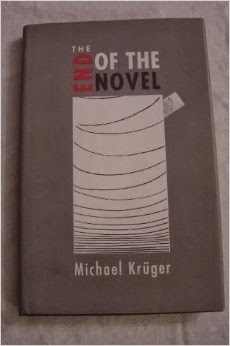
@LeeRourke brought this book to my attention on Twitter. It sounds great, about ‘a man who begins to delete his novel’. I’ll have to order a copy. What? It’s a novella, I’ll fly through it. What? The TBR pile falling on the dog last night? I reinforced the pile with coffee-table book bookends. Besides, the dog seems to prefer sleeping under the table now.

I’m also waiting for the postman to bring Chimera, by John Barth. Here’s Wikipedia: 


Chimera is a 1972 novel by the American writer John Barth, composed of three loosely connected novellas. The novellas are Dunyazadiad, Perseid and Bellerophoniad, whose titles refer eponymously to the mythical characters Dunyazad, Perseus and Bellerophon (slayer of the mythical Chimera). The book exemplifies postmodernism, with several Q&A sessions and three diagrams, all in Bellerophoniad.


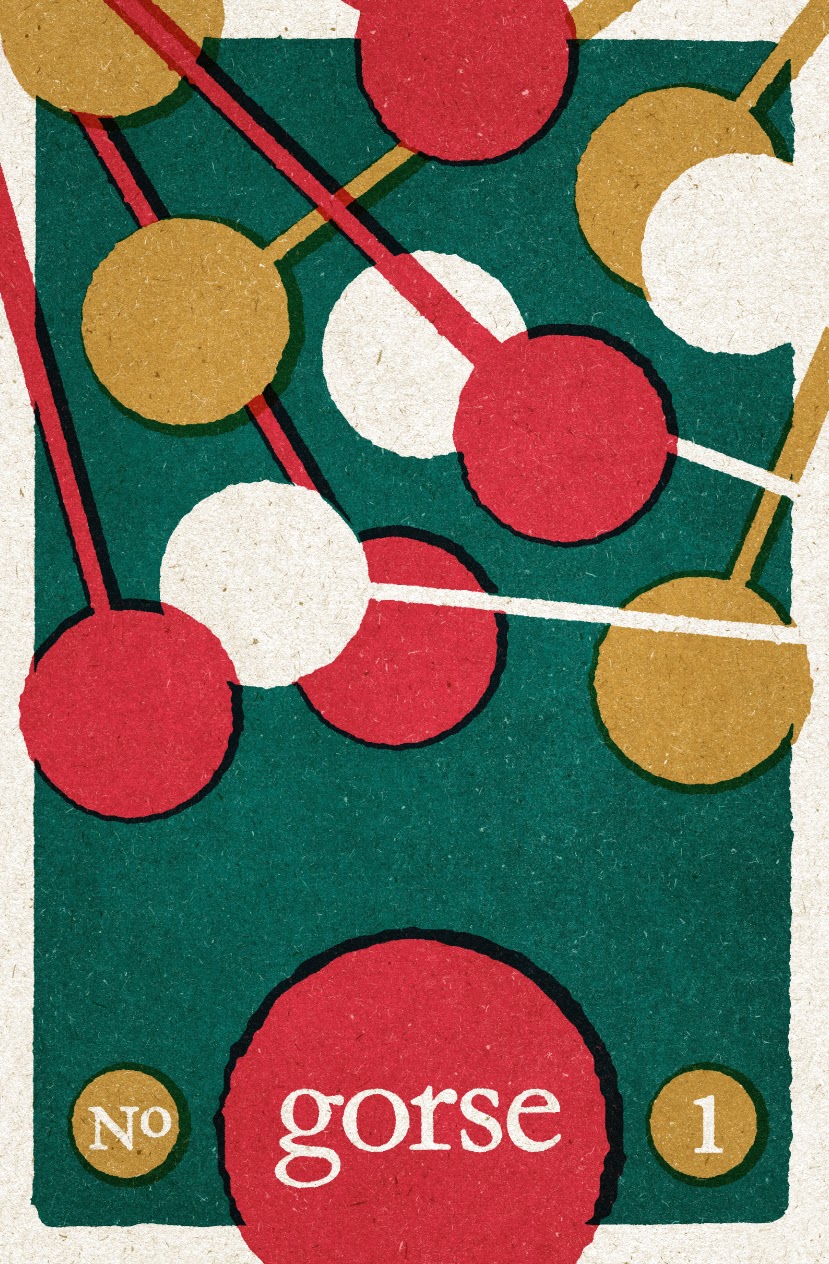
There’s a bit of a renaissance going on in at the moment in Irish experimentalism, and I’m all for it. Literature needs its pioneers. I have my gorgeous copy of gorse‘s first issue (limited and numbered, so you’d better get cracking…); The Honest Ulsterman is coming back, online, this year; Colony is new, and accepting submissions of ‘innovative and unconventional writing’.

Will I be submitting? I tend to steer away from — to paraphrase The Honest Ulsterman‘s Darren Anderson — the charade of writing which declares itself experimental (article on William Burroughs) — it hasn’t gone well in the past. My plan is to keep reading, to keep asking questions, and to pay attention, because if novelty is to emerge, it will most likely do so organically.

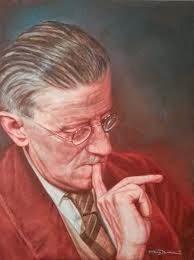
Declan Kiberd on Joyce’s The Dead

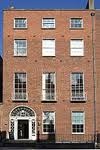
I know Professor Kiberd only from his books, and the two I’ve read, Ulysses and Us and Inventing Ireland, were reasons enough to go along to his talk at the James Joyce Centre last night, Nollaig na mBan (Women’s Christmas). That it was free, and held in the lovely Georgian house that is home to the Centre, were added bonuses. We were an intimate group (and an eccentric one, but that’s a story for another post), so I’ll try and give some highlights for those who didn’t make it. Fortunately, I believe the talk was recorded for YouTube, so my errors and omissions will be correctable in due course.

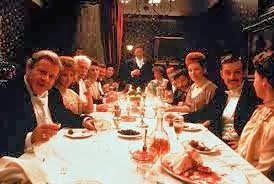
More technology: the UCD app for The Dead, which can be downloaded for free, was launched yesterday too. Kiberd noted that as a keen user of technology, Joyce would have approved. And one more non-paper version of The Dead, which was recommended several times during the evening, and which I recommend heartily too, is John Huston’s 1987 eponymous film, starring Donal McCann and Anjelica Huston.

Kiberd has the sort of eclectic brain and articulate delivery that makes me wish he hadn’t left UCD (for Notre Dame). He can shift from The Dead to The Commitments to Gulliver’s Travels and back with a virtuosity that would put Lang Lang to shame. So where to start?

Maybe with this: artists can be media for forces more powerful than any one person can be – offered as an explanation for the extraordinary maturity of the stories that make up Dubliners from an artist so young and who, outside his writing, was making a complete hames of his life.
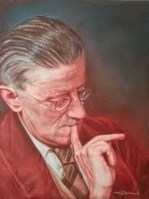
Kiberd regretted that Dubliners is so often viewed as Joyce’s apprentice work. Even Yeats, who should have known better, said it ‘contained promise of a novelist of a new kind.’ Kiberd opined that the short story is a form suited to a society still unmade, whereas the novel contains the layers of a fully made society, but that all of Joyce’s so-called novels (Portrait, Ulysses, the Wake) were forms of emergency that were still not novels. [You have to love someone who can confidently use ’emergency’ this way.] He felt that generic definitions ‘congealed around Joyce’ when Joyce’s project was the reverse, to effect an escape from the constriction of genre. His desperate characters who want to move but can’t, reflect Joyce’s dream of expressing freedom as a writer. He wanted to escape the constraints of the short story and novel forms; he wanted to produce something very new.

Dubliners is neither short stories nor a novel. [I hadn’t heard before Kiberd’s theory that the individual stories in Dubliners and Ulysses are parodies of the great European novels: that The Two Gallants are Don Quixote and Sancho Panza, and Mrs Sinico in A Painful Case is Anna Karenina, both struck by a train.] These European novels follow a growth, or developmental model, which was challenged by writers like William Carleton, Maria Edgeworth, Beckett, and Joyce who wrote instead ‘shards and patches’. Kiberd felt that Joyce was indebted to Maria Edgeworth, pointing out that both were committed to the same thing – the decline of a community. As Edgeworth does in Castle Rackrent and Joyce in Dubliners, Both show public decline from private examples and, like Dubliners, Castle Rackrent is neither short stories nor novel, but something in the interstices between the two, some form of emergency [there it is again].

We will have a name for the form, Kiberd joked, in about three hundred years time.
‘Novel-in-stories’, anyone, I didn’t dare ask, for fear of congealing Joyce, and who would want that on their conscience?

Kiberd’s description of The Dead as ‘a series of women punctuating Gabriel’s self-esteem’, and his prominent references to Maria Edgeworth, Edna O’Brien, Claire Keegan and Eilis Ni Dhuibhne over the course of his talk, offered more than a nod to Nollaig na mBan.
Rijksmuseum

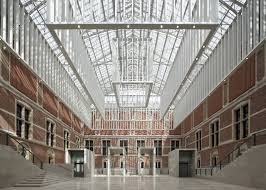
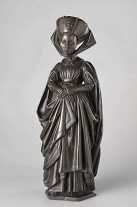
I met these lads in Amsterdam before Christmas. There’s a story in here somewhere, I’m sure of it… I hadn’t been in the Rijksmuseum before, so can’t compare its pre-make-over with its current incarnation, except to say that it is fabulous. There’s a huge, bright concourse at the centre, with a cafe and museum shop, then four floors, with annexes, of art.

I only managed the ground and second floors. I’ll save the 18th century for another trip. My favourite piece might be the Ten Weepers, but I was also thrilled to see, first-hand, several of the works so evocatively described by Zbigniew Herbert in Still Life With A Bridle.

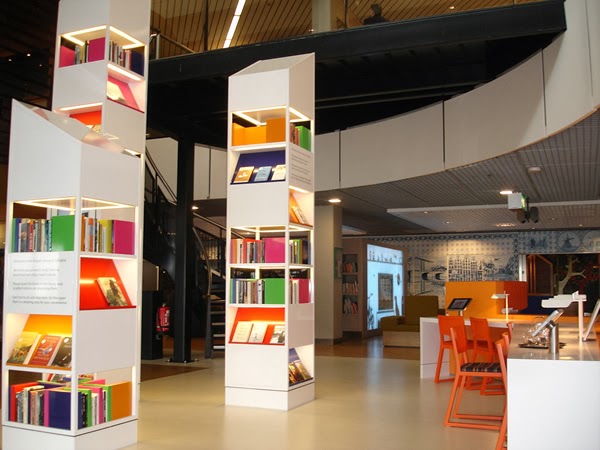
Unfortunately our flight home was cancelled and we spent several hours in limbo in Schipol before eventually being bussed to an Ibis. Too bad we didn’t know about the airport library. Now that’s civilised!

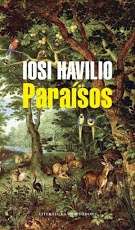
Review of Iosi Havilio’s Paradises

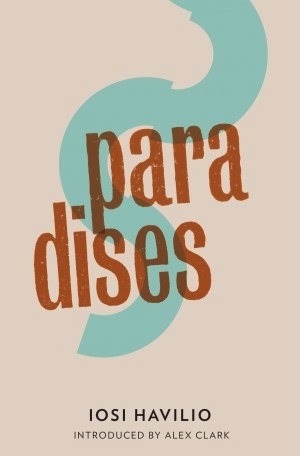
I reviewed Iosi Havilio’s Paradises for the stylish gorse.ie

Gorse is a new ‘twice-yearly print journal…featuring longform narrative essays, original fiction and interviews. Issue one will be available January 2014. gorse is an exploration of the art of words…interested in the potential of literature, in literature where lines between fiction, memoir and history blur, in the unconventional and the under recognised.’

And you can’t argue with that! 

We Have Tested And Tasted Too Much

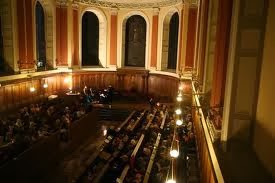
I freely admit I’m a ‘carols without context’ sort of person. Context is fine, but not so easy on the nerves when the company includes two nearly five year olds. On Monday, we attended the college’s ecumenical carol service in Trinity College Chapel, an area of the college I didn’t darken often in my undergrad days, and even if it was an hour and a half long, it was gorgeous. The Trinity Choir sang carols from Silent Night to lesser-known Benjamin Britten’s, and it was truly uplifting. And the ‘context’ — readings and lessons — was thought-provoking, not least when Kavanagh was invoked. It’s never too soon to read Advent again. Enjoy.
Advent

We have tested and tasted too much, lover-
Through a chink too wide there comes in no wonder.
But here in the Advent-darkened room
Where the dry black bread and the sugarless tea
Of penance will charm back the luxury
Of a child’s soul, we’ll return to Doom
The knowledge we stole but could not use.

And the newness that was in every stale thing
When we looked at it as children: the spirit-shocking
Wonder in a black slanting Ulster hill
Or the prophetic astonishment in the tedious talking
Of an old fool will awake for us and bring
You and me to the yard gate to watch the whins
And the bog-holes, cart-tracks, old stables where Time begins.

O after Christmas we’ll have no need to go searching
For the difference that sets an old phrase burning-
We’ll hear it in the whispered argument of a churning
Or in the streets where the village boys are lurching.
And we’ll hear it among decent men too
Who barrow dung in gardens under trees,
Wherever life pours ordinary plenty.
Won’t we be rich, my love and I, and
God we shall not ask for reason’s payment,
The why of heart-breaking strangeness in dreeping hedges
Nor analyse God’s breath in common statement.
We have thrown into the dust-bin the clay-minted wages
Of pleasure, knowledge and the conscious hour-
And Christ comes with a January flower.

One Image: One Hundred Voices

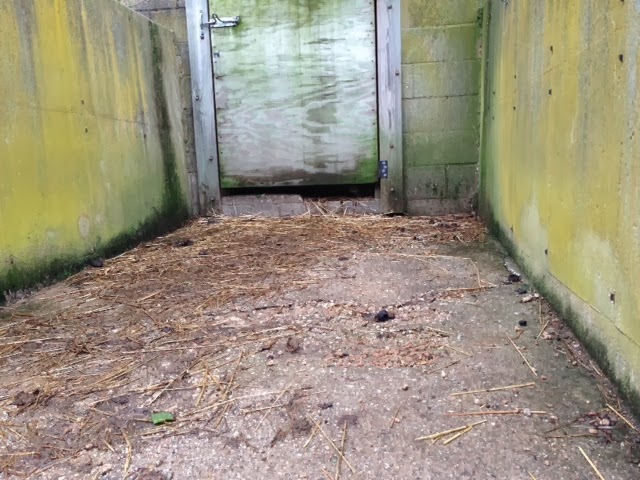
‘One Image: One Hundred Voices 2013 is a global community literature project whose vision has been to bring together a cross section of voices from around the world based on one image.’ The challenge was to respond to the image above in 100-250 words. There are non-fiction, fiction, and poetry pieces up on the site, with an intriguing world map showing the locations of the contributors. I’m delighted to fly the flag for the whole of north-western Europe with my offering, You Weren’t Here.